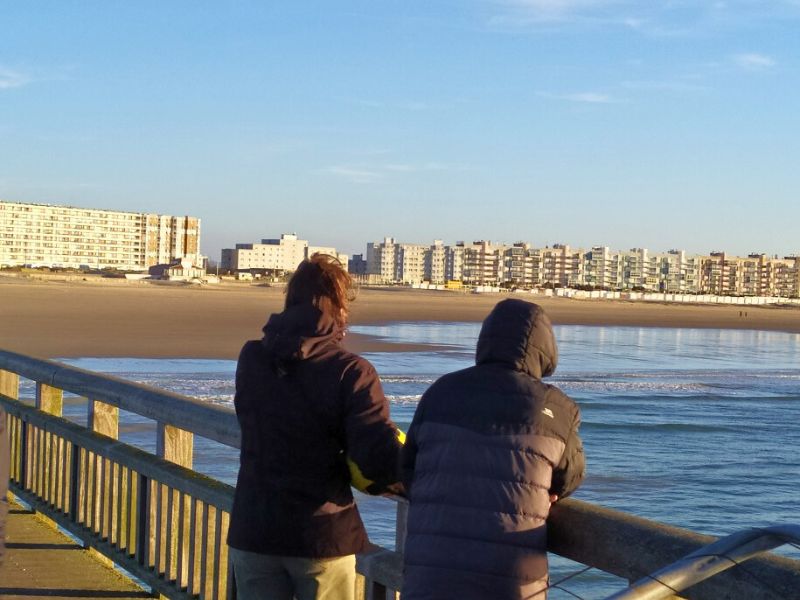
For more than two decades, Calais, the closest European port to the British coast, has been the scene of a steady, high flow of migrants in transit attempting to reach England by makeshift means. The migrants come mainly from countries in the Horn of Africa-particularly Sudan-and from the Middle East and Central Asia. They are mostly single men, but there is no shortage of women, children and entire families.
By precise political choice, the entire institutional reception is concentrated in centers far from the French coast or otherwise poorly connected to it. The policies adopted by local governments and the central government focus on the security aspect: countering informal migrant settlements and deterring departures.
The journey to the United Kingdom is made mainly in two ways: by buying, at great expense, a place on one of the dinghies that criminal organizations put out to sea when weather conditions permit and surveillance slackens, or by smuggling themselves aboard the many heavy vehicles that board the cross-Channel ferries every day.
The increasing deployment of forces and means, financed largely by the British government, makes departures increasingly difficult, and they take place from increasingly peripheral locations and under increasingly precarious security conditions. While far from the numbers of the Mediterranean route, there is no shortage of accidents, sometimes fatal. In 2024, more than one hundred fatalities were recorded, while since the beginning of this humanitarian emergency, deaths exceed five hundred. Also in 2024, some 65,000 asylum seekers reached British shores.
Migrants in transit arriving in Calais live in informal encampments of various sizes – so-called “jungles” – mostly located on the edge of the city, at disused factories or in areas of dense uncultivated vegetation. Over time, the jungle phenomenon has spread to other towns on the Opal Coast, mainly Dunkirk and Boulogne-sur-Mer. Local government efforts are all geared toward making the phenomenon invisible and marginalized, pushing it out of urban centers.
In the face of the stubborn refusal to address the issue from a humanitarian point of view, organizations operating in the area have formed a very cohesive and effective network. The network deals with the distribution of basic necessities, comfort goods, offers guidance and accompaniment services at the legal, bureaucratic and health care levels.
The area of shelter remains the one where the need for intervention is most keenly felt. In Calais, there are three shelter houses in operation – including Maison Effatà – which, while far from meeting the entire housing need, offer shelter and comfort to at least some of the most fragile people.
What ASCS does in Calais
Since the beginning of 2024, ASCS with its workers and volunteers has been animating the activities of Maison Effatà, a shelter for transient migrants capable of accommodating ten people, giving priority to individuals with frailties, due to injuries sustained during the journey or previous illnesses, or otherwise people particularly tried by life in the informal camps.
Maison Effatà aims to be more than just a guesthouse and to also be a place of encounter and where relationships are fostered. Beneficiaries participate in the management of house life, contributing to the care and cleaning of the premises, preparing food together with the staff, each one compatibly with the possibilities that their psychophysical conditions give them. The House staff carries out accompaniment and guidance in health and even bureaucratic matters, in consultation with other organizations in Calais. It organizes creative and recreational activities of which the residents of the house are not just users but actors and promoters. ASCS volunteers in Calais also collaborate with outside activities and participate in initiatives proposed by the network of organizations.
Maison Effatà is also an active member of the Toiles network, which brings together foster homes throughout France. All Maison Effatà staff activities are carried out with the collaboration and under the supervision of the Scalabrinian Fathers of Calais.