Diary from Ceuta: Reception Amid Tensions and an Emergency
Diary from Ceuta: Reception Amid Tensions and an Emergency
“I was hungry and you gave me something to eat, I was thirsty and you gave me something to drink” (Mt 25:35). I never would have imagined that these words would cost me so much today, when suddenly giving a glass of water or a piece of bread has become difficult and even makes one feel powerless.
Ceuta is a small Spanish city located in North Africa, on the border with Morocco and overlooking the Strait of Gibraltar. In recent days, the city has been facing a particularly dire situation. Thousands of people, including many minors, have arrived in a state of extreme vulnerability. The streets, parks, and public spaces have filled with faces marked by exhaustion, uncertainty, and hunger.

We at Casa San Antonio—a small shelter for migrants supported by the network of the Secretariat for Migration of the Diocese of Cádiz and Ceuta—have also tried to lend a hand. In the early hours, we provided assistance to several injured people, distributed water, bread, and basic necessities, and offered information to those who arrived completely disoriented. However, our facility is small, and the scale of the emergency has far exceeded our capacity to respond.
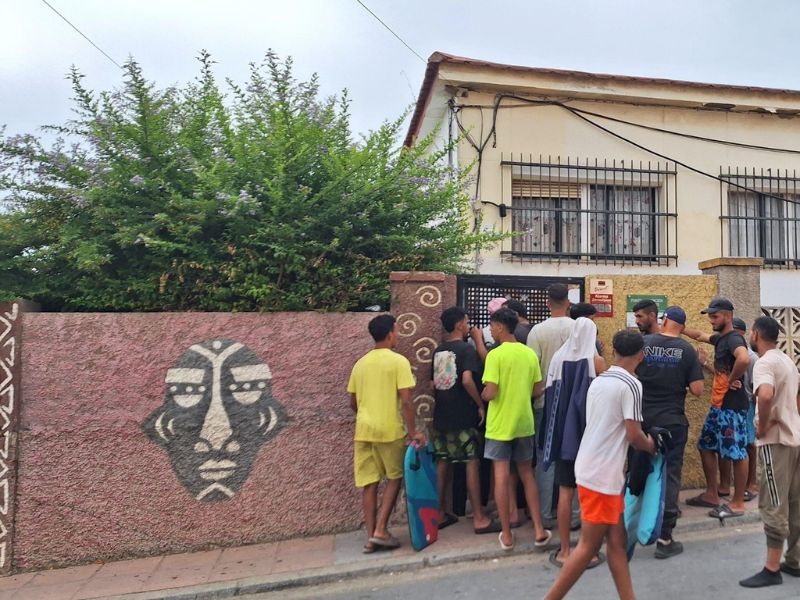
I have a vivid image in my mind of some children who, as they walked by, peeked through our gate. They weren’t asking for much: a little water, a piece of bread. With a gesture that expressed their deepest need without words, they brought their palms to their mouths, cupping them as if to blow a kiss. Unfortunately, it’s not that simple to help them. Sometimes we gave them something cautiously; other times we had to reluctantly tell them we were sorry, that we couldn’t. We acted with extreme caution: the army is just a few meters away, and distributing food or water risks being seen as a disturbance of public order. How can one harden one’s heart in the face of all this? It’s impossible.
Added to this is the high level of tension in the streets. Some people have taken to the streets to protest, sometimes armed with sticks, and clashes have broken out, resulting in injuries and fatalities. Meanwhile, migrants wander aimlessly, with nowhere to stay; stores remain closed; and law enforcement officers constantly move them from place to place to wear them down and redirect them toward the border.
There are complex underlying issues involving political dynamics and agreements between governments. What is clear, however, is that it is always the poorest who pay the price, used as pawns in a game they did not choose.
And it hurts to hear the way people talk about these individuals. Some politicians speak of an “invasion,” as if they were coming to attack; but I see only children, women, young people, and families. Lumping them all together, equating them with criminals, and instilling fear isn’t informing—it’s sowing hatred. And that’s not what the Gospel teaches us. It’s heartbreaking even to hear children, from the balconies of the city’s buildings, shouting at the soldiers: “Soldier! Soldier! They’re hiding in the church, in the garden! Three have escaped—go back to your own country!” It’s truly heartbreaking to see how migrants have to hide and beg for help while the army and police chase them.
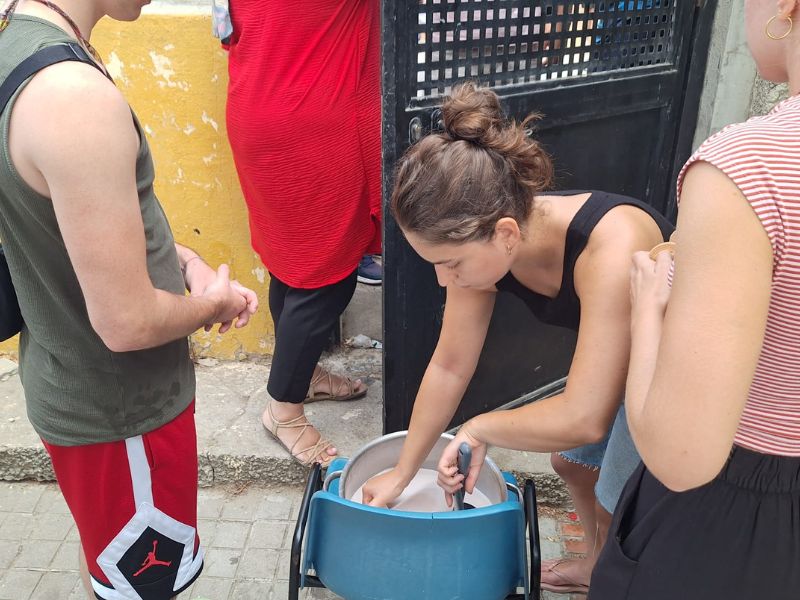
We do our best to respond, always with caution. Here in San Antonio, we are now joined by four young volunteers who have arrived from Italy with the ASCS (Scalabrinian Agency for Development Cooperation). María Victoria and Francesca have been here for about a month and a half and have been working tirelessly. Alessandro and Alessia have just arrived: they said that during their trip, as they watched the news, they couldn’t wait to reach their destination; they arrived on time and got right to work. Joining them are the staff, the heads of the Migration Secretariat, and local volunteers. As a Church, we have made ourselves available to the relevant institutions and organizations, offering what we have—human and material resources—while respecting everyone’s respective roles. We don’t want to act alone, but rather coordinate our efforts to figure out what concrete contributions we can make. It’s a small and humble gesture, but one made from the heart: a little water, a piece of bread, and our presence—so that no one feels alone. We can’t do more than this, but for us, this alone is already a response to the Gospel.
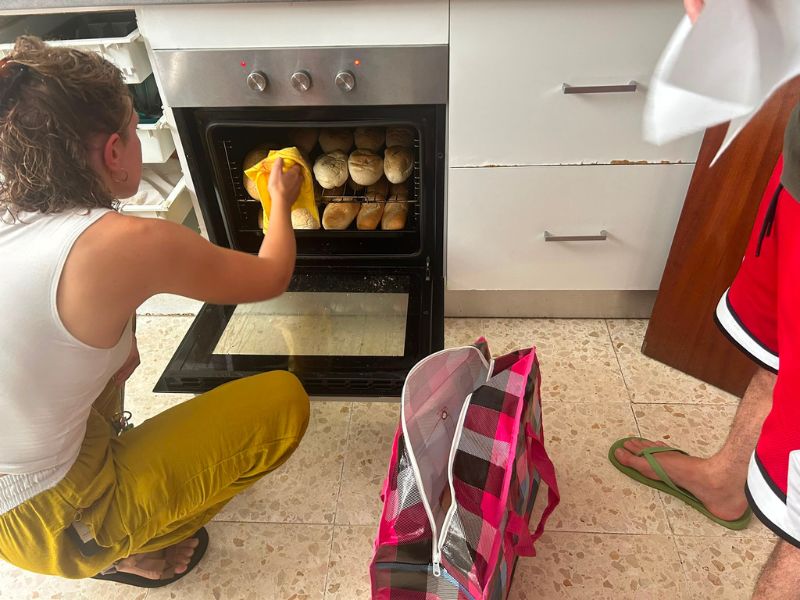
We’ll keep sharing food and drinks as long as we can. We won’t solve such a huge problem, but we want to make sure that no child who knocks on our door leaves feeling abandoned. Because, when all this is over, the fundamental question will remain the same: “I was hungry and you gave me food, I was thirsty and you gave me something to drink, I was a stranger and you welcomed me” (Matthew 25:35).