Our privilege of crossing borders: account of a trip to the Balkans
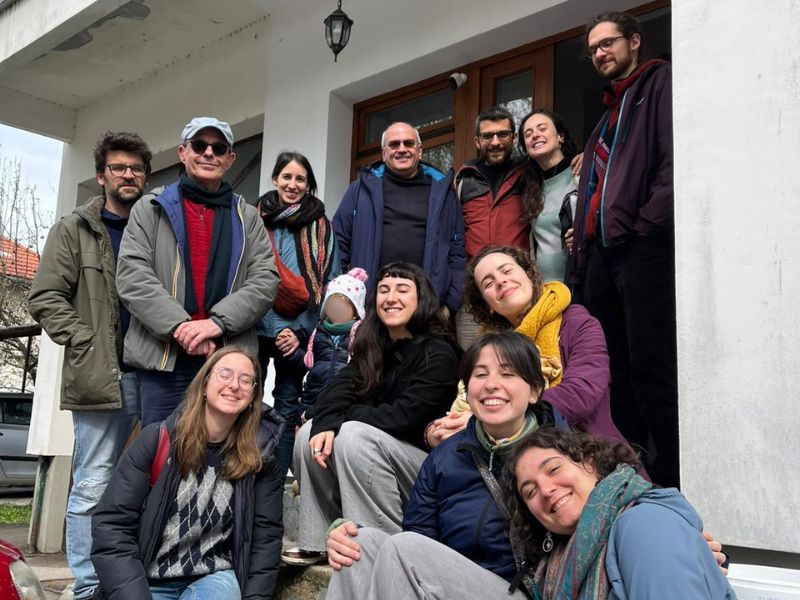
In early April, as an ASCS delegation, we set off for a week together with Revolt to the Balkans, a network monitoring and reporting on what is happening along the Balkan Routes. During the trip we passed through some significant junctions of the route, between Bosnia and Herzegovina, Serbia and Croatia, meeting solidarity presences active in these places in support of people on the move.
Bosnia and Herzegovina: Bihać and Tuzla
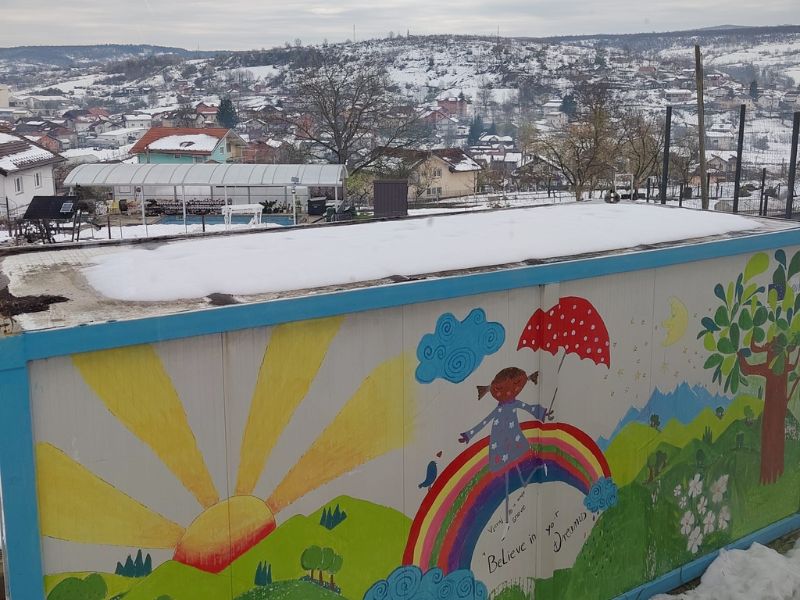
The first stop was in Bihać, a city located in northwestern Bosnia and Herzegovina. Its location makes it a crucial transit point for those heading to Croatia, hoping to cross the border between the two states and reach the European Union. We were introduced to the city by IPSIA, an NGO that has been working in the area since 2018, providing support activities for people on the move. Part of the association’s work is aimed at running a home for unaccompanied minors, inside which we were warmly welcomed by the people who live there. “Familial” was the term employed several times to describe the soul of the association, hinting at an atmosphere of cohesion and mutual support in facing daily challenges, from the path to obtaining documents to soccer games.
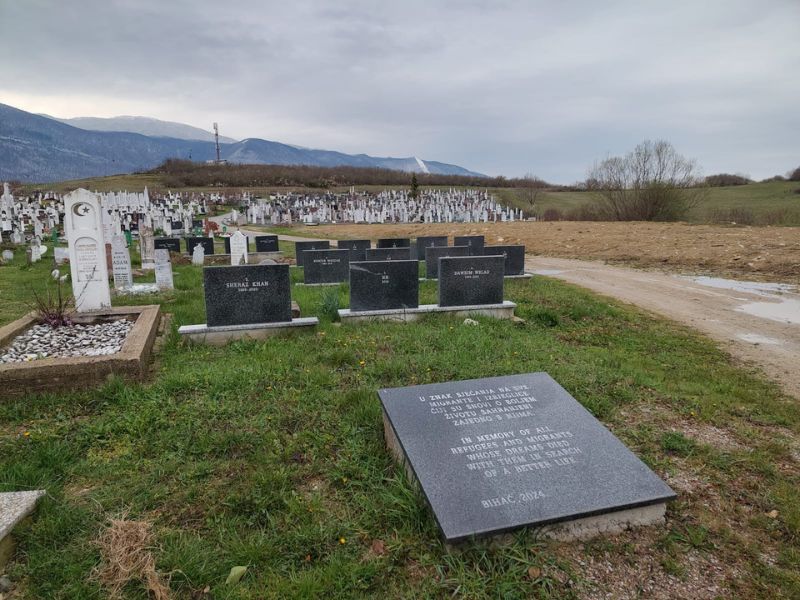
We were then guided by the SOS Balkan Route association inside the city’s municipal cemetery: the association is responsible for tracking down and giving dignified burial to people who unjustly lose their lives to the border, a stark line clearly visible on the mountain behind the cemetery, artificially created so that people can be better seen passing through. The black stone headstones stand out from the others. Many of them bear no names or dates, as the identification process cannot always be completed.
We continued our journey by moving eastward from Bosnia and Herzegovina to the city of Tuzla, where we met the association Djelui.ba, whose solidarity actions are manifold. Preparing meals for those who live inside the camps, providing dry clothes for those who arrive in the city after fording the Drina River on the border with Serbia, and dignified burial for those who leave their lives there: all attempts to fill a critical institutional vacuum that exacerbates the travails of migrant people.
In Serbia: the border and Novi Sad
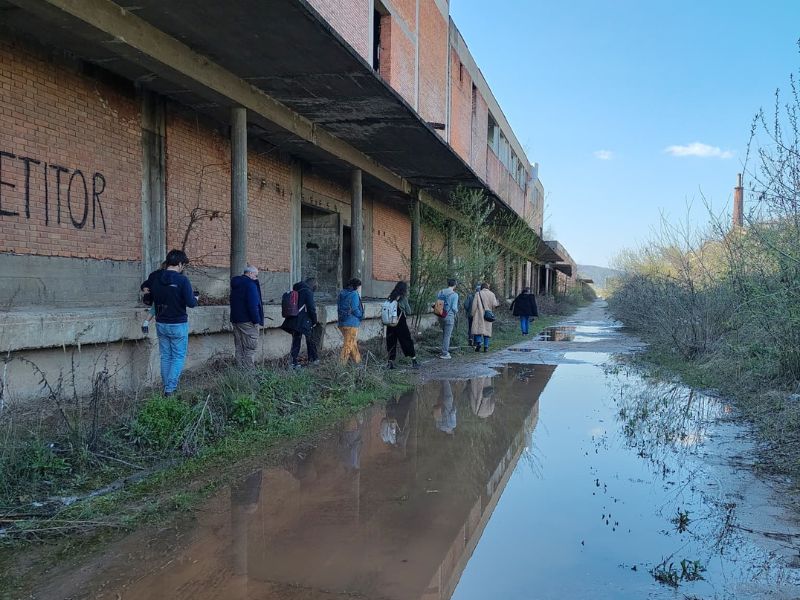
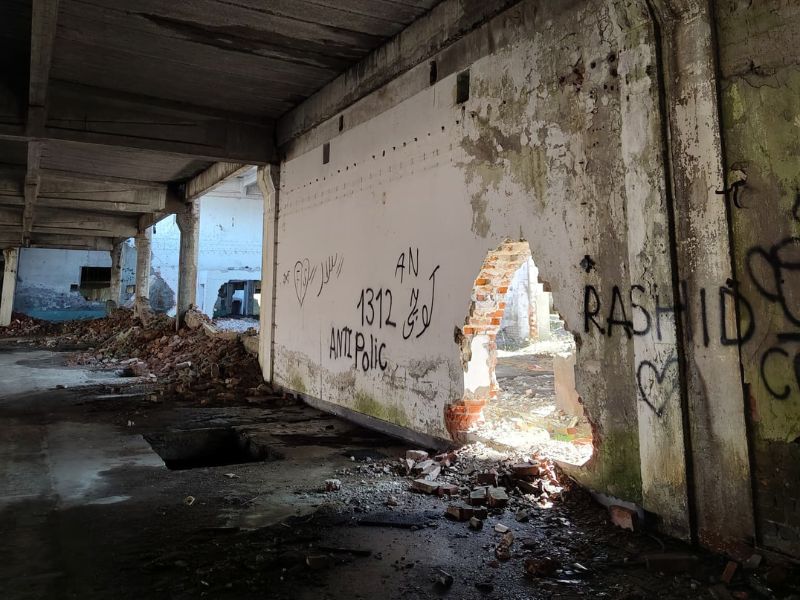
Having crossed the border, we entered Serbia. We walked inside an informal encampment that for varied lengths of time has been traversed by those waiting to cross the border into Bosnia and Herzegovina. This space, in precarious condition to say the least, is currently less used than before, but traces of recent crossings are still visible, a symptom of the still strong need for presences like Djelui.ba in these areas.
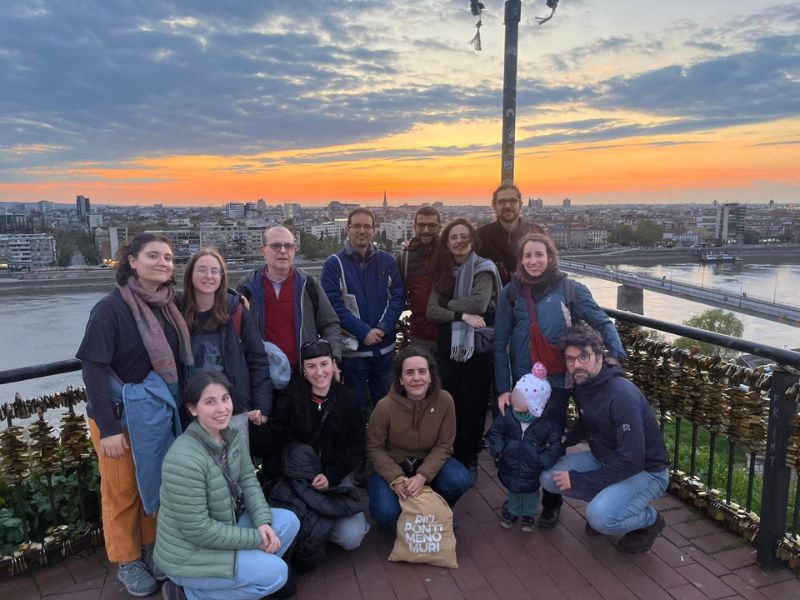
Our trip continued to Novi Sad in northern Serbia, this stop was very interesting for us from the standpoint of intersectionality: being able to interweave the theme of migration with dissent to authoritarian regimes.
Here we met a professor of Italian and modern literature at the University of Novi Sad. Through his experience, we learned about the climate inside the universities and the tension of the faculty and student body against the Serbian regime.
Having concluded the day in Novi Sad, we parted ways with the network Facing the Balkans to continue on to our final stop: Zagreb, Croatia.
Croatia: Zagreb and the end of the journey
In the wake of our meeting with the professor, we had the opportunity to meet with two Serbian student activists who have been in political exile in Croatia for the past year and have been charged with “attempted violent overthrow of the Constitution” for their participation in organizing protests after the collapse of the Novi Sad train station shelter, which claimed 16 lives on Nov. 1, 2024.
Their words gave a lucid picture of the political situation in Serbia and the reasons why mobilization against an increasingly authoritarian regime is necessary.
They told us that despite their forced removal, they are rebuilding their daily lives in Croatia. One of them has also resumed his studies at the faculty of political science, but he does not rule out one day being able to return to Serbia and continue their political mobilization.
We were very impressed by the strength and words of the two activists. It was impactful to learn how their political actions have had such powerful repercussions in their lives.
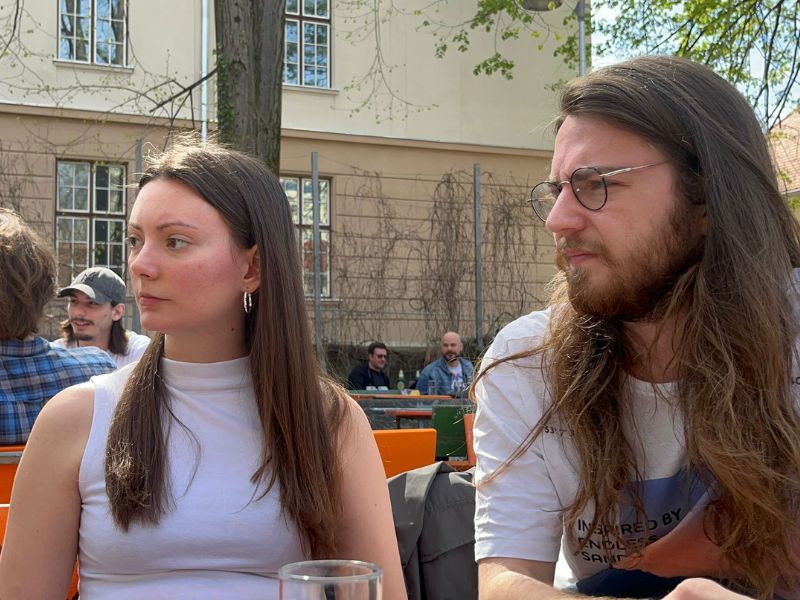
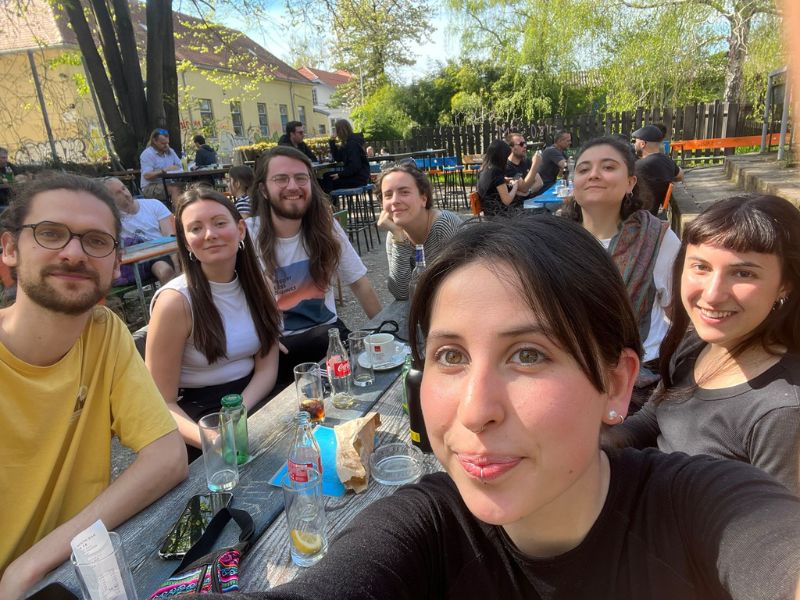
Our second meeting in Zagreb was held at the Jesuit Refugee Service (JRS). Welcomed by Turkish coffee, we learned about their activities in support of people on the move: educational programs, legal assistance and psycho-social support, aimed at facilitating accompaniment and integration into Croatian society.
Afterwards, we went to the Center for Peace Studies, which presented us with a very detailed picture of the migration situation in the country. Although the number of asylum applications has decreased in recent years, there is an increase in violent rejections at the border, with serious physical and psychological repercussions on people trying to cross it. They also presented us with the changes that will take place following the entry into force of the New EU Pact on Asylum and Migration and the importance of their timely and effective advocacy in exposing human rights violations.

Having finished our meetings in Zagreb, with our beloved car, we set out again for Trieste, our arrival point.
We returned home very grateful for the experience, motivated by the energy of the people we met who chose to take responsibility for institutional gaps by trying to fill them with their actions.
We end the journey, however, with a realization: while it was safe for us to cross three borders by car, for many people that same route means risking their lives.