More Bridges, Fewer Walls: A Story of the First 6 Months of a Collective Journey Toward Inclusion
More Bridges, Fewer Walls: A Story of the First 6 Months of a Collective Journey Toward Inclusion

Six months ago, “More Bridges, Fewer Walls: Welcoming Communities for Social Inclusion,” an initiative funded by Call for Proposals 2/2025 of the Ministry of Labor and Social Policies and promoted by ASCS in partnership with a widespread network of third-sector organizations throughout the country.
With an operational presence spanning 18 regions, approximately 30 provinces, and 11 metropolitan cities, the project was launched with a specific mission: to take action in the “frontier non-places” — from physical entry and transit borders to contexts of social marginalization and exclusion — to break down the barriers of prejudice and rebuild cohesive, supportive, and intercultural community ties.
Now that we are halfway through this 18-month journey, let’s take a look back at the milestones, statistics, and initiatives that have shaped this first half-year of work.
Borders: Young People on the Paths and Frontiers of Reception
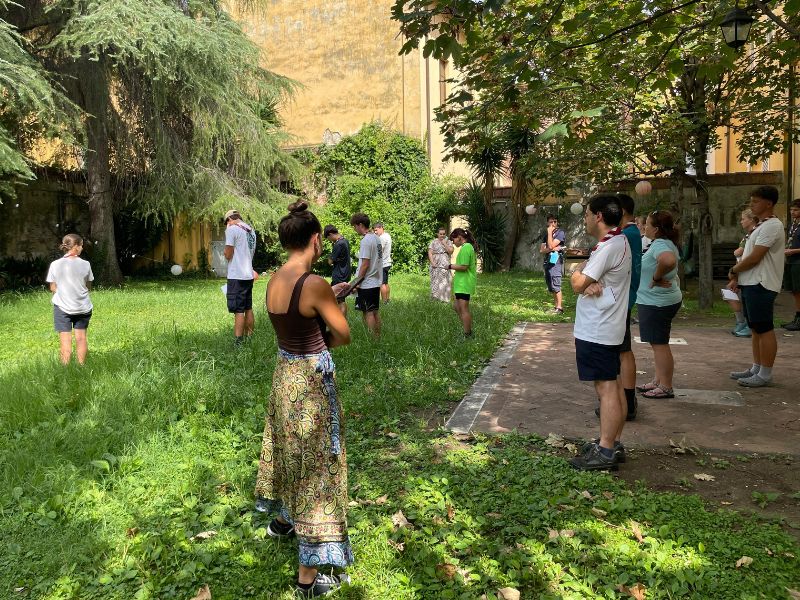
During the summer months, the Borders action line saw 130 young people from Italy and those with a migrant background (aged between 18 and 29) get personally involved.
Between July and August 2026, ASCS organized five experiential volunteer camps: “Through 26,” taking participants to key border locations in the north (Como, Oulx, and Trieste) and to areas in the south affected by the phenomenon of illegal agricultural labor recruitment (Cuneo and Foggia). The young people gained hands-on experience serving and interacting directly with migrants and refugees, developing a deep understanding of the contexts surrounding migration.
The first semester also featured two other important pillars of education and community building:
- The Leuca Charter (August 10–14, 2026): Organized by our partner Form.AMI, the 11th edition of this international gathering brought together young people for moments of intercultural exchange and reflection inspired by Don Tonino Bello’s prophecy on the “conviviality of differences.” The initiative also featured the notable presence of Cardinal Pierbattista Pizzaballa.
- Training and Rights in Pisa: The Sante MalatestaAssociation organized training sessions on the topic of human mobility, exploring the diversity of migration pathways and opportunities for protection.
Job-In: Career Guidance and Pathways to Dignified Employment
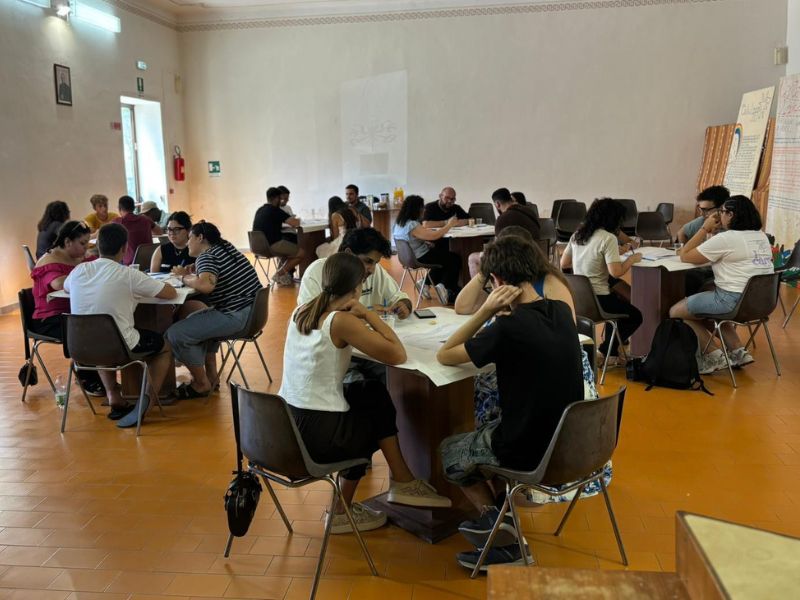
Promoting economic and social autonomy is at the heart of JOB-IN’s work. In the first half of the year, the organization supported 51 migrants and refugees (ages 18–65) on their journey toward empowerment and active citizenship:
- Career Guidance and Service Support: Farsi Prossimo in Faenza and the Caritas Solidarity Foundation in Florence provided social and career guidance, skills assessments, and support for resume writing and access to local training opportunities.
- Language Literacy: An A2-level Italian language course integrated into non-formal education settings was heldat the ASCS headquarters in Milan.
- European Mobility for Youth: In Pisa, the Sante Malatesta Association led informational sessions on European Union opportunities (Erasmus+ and European Solidarity Corps) for university students with migrant backgrounds.
Remix: Dialogue in Schools to Prevent Discrimination
Combating early school leaving, bullying, and prejudice requires educational efforts with the younger generations.
In Rome and the Lazio region, our partner organization, Centro Astalli, organized a series of intercultural workshops in comprehensive schools, engaging with numerous students in middle and high schools. The initiative allowed Italian students and those from immigrant backgrounds to interact directly with refugees and eyewitnesses, fostering socialization and integration among peers within school settings.
Flexible Responses in Complex Contexts and the Power of Collaboration
Operating in such diverse contexts required the ASCS coordination team and the entire partnership to demonstrate a constant ability to adapt. From managing the bureaucratic uniformity of data to coordinating organizations of varying sizes, to the sudden changes in border contexts—as happened in Oulx with the unexpected closure of the Massi Mountain Hut, which required a rapid reorganization of the local network —the project has demonstrated the resilience of host communities in the field.
This work is also supported by outstanding external partnerships with public and academic institutions:
- Sacro Cuore Catholic University of Milan (ARC Center): for methodological guidance and the Social Impact Assessment of the project.
- Sardinia Region: providing support for regional dissemination and discussion events on the topics of volunteerism and the protection of maritime workers.
- National partnerships: the involvement of established networks such as AGESCI Nazionale, Consorzio Communitas, COORDIT (Re-Agire), and EUREKA SCS for training.
Toward the Second Semester
With the conclusion of the first semester, the RE-AGIRE program’s training and capacity-building initiatives are set to begin, targeting 470 professionals and educators to strengthen their intercultural skills and trauma management capabilities. At the same time, media coverage and the voices of those involved will continue on the On The Move Web Radio station, with active collaboration from the podcasts to be produced by Caritas of Pescara-Penne.
The first six months of “More Bridges, Fewer Walls” confirm that intercultural encounter is not an abstract concept, but a daily practice made up of shared steps, classrooms open to dialogue, and hands extended across borders. Keep following us to discover the next steps!