ASCS’s Summer: Migration Routes, Communities, and Open Doors—The Report for July, August, and September 2026
For ASCS, the summer of 2026 was an intense time of journey, encounter, and widespread presence. Between July and September, we crossed both physical and existential boundaries: we traveled along Europe’s and Italy’s migration routes with our summer camps, responded to emergencies at the borders of Ceuta and Calais, and upheld the daily life of our homes in Rome, Milan, and Chieri. This quarter reminded us of a profound truth: hospitality is not a service provided, but a way of life and a way of relating to others that has the power to transform both people and communities.
Comprehensive Care: Pathways to Independence and Community Life
In our homes and community projects, the summer months and early fall were dedicated to personal care, creating job opportunities, and fostering a sense of community.
Rome: The Warmth of Casa Scalabrini 634 and Workplace Inclusion
In Rome, summer was spent outdoors and among people. From the classic summer soccer tournaments at the Villa de Sanctis club to relaxing days at Lake Castel Gandolfo with volunteer families, Casa Scalabrini 634 proved once again to be an open, family-friendly space for residents and former residents.
The deeper meaning of this welcome was also reflected in the service they provided to the city: through the “Ri-diamo” initiative, carried out in collaboration with the team at the Basilica of the Sacred Heart, the young people in our care actively participated in supporting the homeless at Termini Station. A concrete act in which those who have received protection choose to give of themselves to others, demonstrating that a welcoming home truly changes the world.
In terms of workplace empowerment, the 5-month training internship for the “Raccogliamo Opportunità” project concluded at the end of September: Three young women supported by ASCS gained hands-on experience at Casale di Martignano in landscaping, farming, food service, and hospitality, acquiring essential skills for their independence.
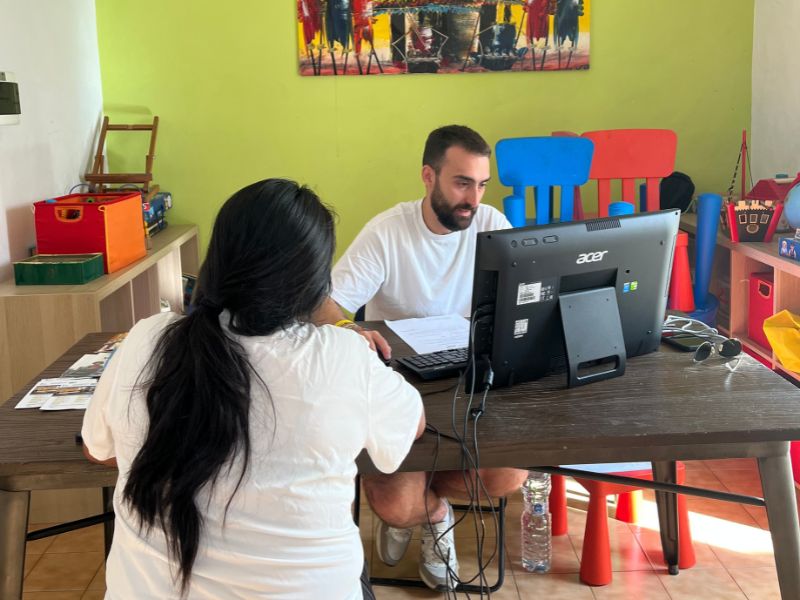
Milan: Well-being, Collaborative Planning, and the Resumption of Courses
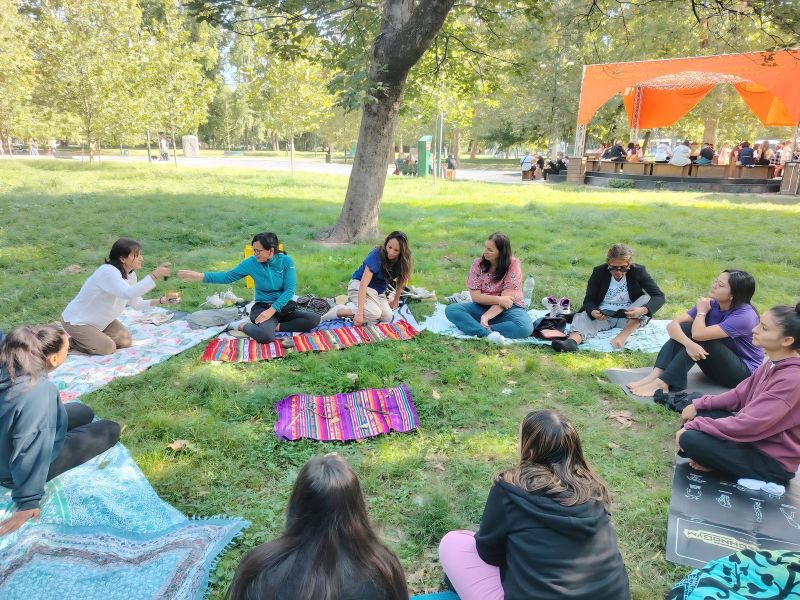
In Milan, the Wasi (“home” in the Quechua language) has supported the women in the program with moments of togetherness—such as the summer picnic “A Chat and a Laugh!” — and gatherings focused on nurturing one’s inner self.
On Saturday, September 31, we paused, took a deep breath, and reconnected with nature and with ourselves. Through slow walks in Sempione Park, tuning into our senses, and the power of sharing, the event “Rediscover Your Roots” was a unique moment of renewal and pure tranquility for all of us. A heartfelt thank you to all the extraordinary women who participated and to our psychologists Fernanda Vargas and Orietta Huaman for guiding us with such care and kindness. See you at the next Wasi Project meeting!
September also saw an important institutional and community milestone: ASCS participated in the Open House for Neighborhood Community Centers in Milan’s 1st Municipal District, presenting the co-design plan for the 2026–2027 academic year, which will include the launch of the Wasi psychological support service and a myofascial yoga course. Finally, at the Chiesa del Carmine, classes for the new academic year have resumed: Italian, English, yoga, and dance-movement therapy.
Chieri: The Language That Brings People Together
In Chieri, the Italian workshop didn’t stop even in August: thanks to the generosity of new volunteers who ensured the program’s continuity, classes and conversation groups took place throughout the summer, laying the groundwork for the fall sessions.
Intercultural Outreach: The Journey of Attraverso26 and the Power of Art
Intercultural Animation has had three extraordinary months, inspiring hundreds of young people to get directly involved in local communities and along border regions.
The “Attraverso26” Traveling Summer Camp
Between late July and early September, the traveling camp Attraverso26 traveled through six symbolic stops to gain a firsthand understanding of the dynamics and wounds of contemporary migration:
-
Foggia (July 26 – August 1): Listening to and serving seasonal farmworkers in the Apulian countryside, addressing issues related to combating labor exploitation and illegal hiring practices.
-
Calais (August 3–9): Outreach in the far north of France in collaboration with the Scalabrinian Fathers, Maison Effatà, and Secours Catholique. Calais remains a key hub for arrivals and departures to and from the United Kingdom and a symbol of European border control policies, where every corner is steeped in stories and testimonies of journeys.
-
Como (August 9–16): Accolti presso la Parrocchia di Rebbio, presidio storico di solidarietà, i partecipanti hanno affiancato gli insegnanti della scuola di italiano ed entrate nelle attività quotidiane di ospitalità. Insieme a Fabio Cani e alla rete Como Senza Frontiere sono state ripercorse la storia delle rotte comasche e le trasformazioni dei confini. Con Como Accoglie si sono approfondite le prassi alla frontiera italo-svizzera, mentre l’incontro in Canton Ticino con la Fondazione Azione Posti Liberi e il collettivo R-esistiamo ha permesso di analizzare le criticità legate ai respingimenti e alla tutela dei diritti dei richiedenti asilo. L’esperienza si è arricchita con il servizio ai senza dimora del quartiere San Rocco e il confronto con Cometa ODV.
-
Trieste (August 16–22): Firsthand accounts from the Balkan route in collaboration with Linea d’Ombra, ICS, and the Diocesan Caritas of Trieste, sharing stories, faces, and emotions gathered along the eastern border.
-
Cuneo and Saluzzo areas (August 23–29): A meeting with seasonal workers in the fruit and vegetable harvest, organized in collaboration with the Diocesan Caritas of Saluzzo and the Caritas of Cuneo.
-
Oulx (August 30 – September 5): A presence along the Alpine pass leading to France, in collaboration with the CRT Foundation and Sentieri Solidali ODV, examining the operational challenges, the lack of dedicated resources, and the ongoing commitment of local activists.
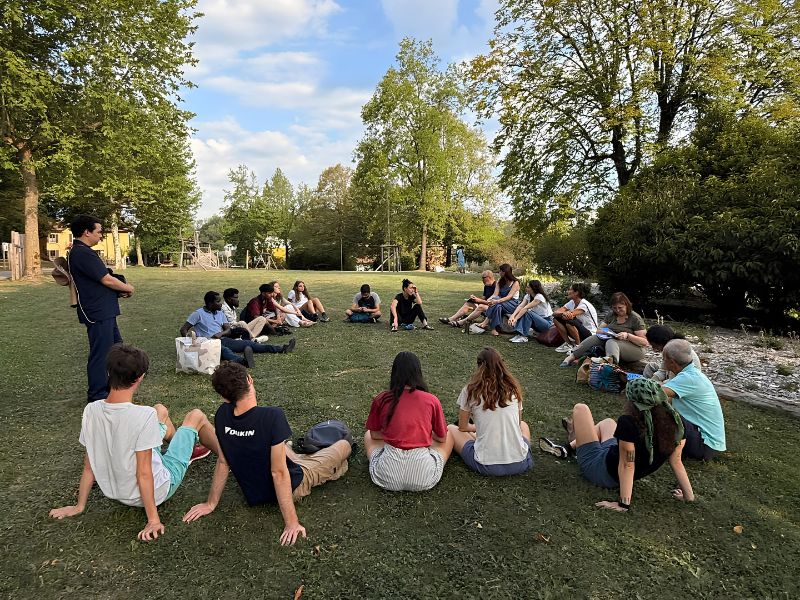
In September, Casa Scalabrini 634 in Rome hosted the Post Campo event , bringing together about 35 young people for two days of reflection, “Teatro Utile” workshops, a scavenger hunt in the Tor Pignattara neighborhood, and in-depth discussions between volunteers and residents.
Culture, Music, and Participation
Art and music took center stage with Scalamusic.
-
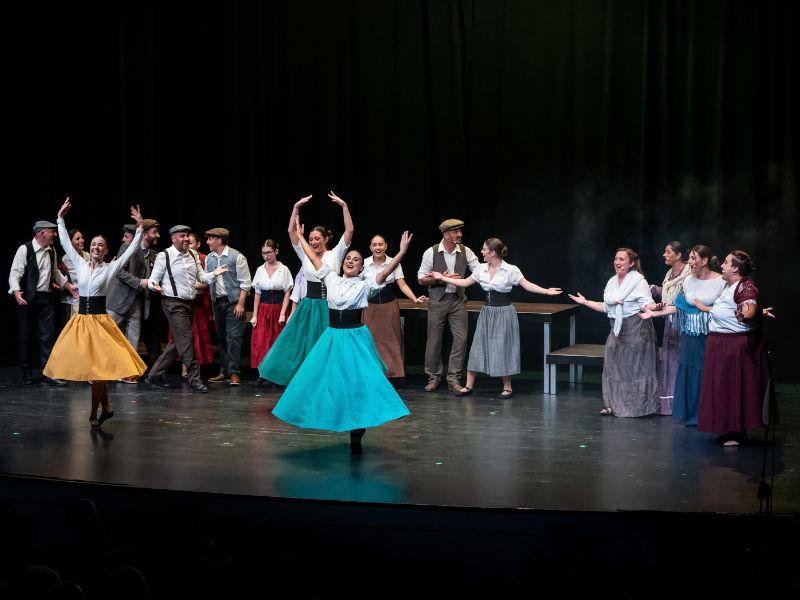
Tour in Canada: From June 26 to July 4, the Scalamusic troupe was in Canada, performing “Per Terre Lontane” in two shows, in Montreal and Toronto. It was an intense journey filled with music, dance, theater, encounters, and profound emotions.
-
Basel and Rome: In addition to the production “Per Terre Lontane,” which was staged at the Teatro Scala in Basel, Switzerland, the new academic year at the Scalamusic Academy in Rome.
In Chieri, the Festival of Hospitality brought the town square to life with international cooking workshops (featuring traditional dishes from Cuba, Nigeria, Afghanistan, and Morocco), shared food, and music. Finally, in Piedmont, about 90 young people preparing to board the Train of Remembrance took part in the experiential workshops “The Game” and “Backway”.
Development Cooperation: Continuous Monitoring at the Borders of Ceuta and Calais
ASCS’s presence in places where the wounds of human mobility are most acute remains one of the organization’s cornerstones. Between July and September, 18 ASCS volunteers set out on field service missions: 9 to Ceuta and 9 to Calais.
The Transformation of Reception at Casa San Antonio (Ceuta, Spain)
In July, Casa San Antonio hosted an average of six young people. Their days consisted of morning Spanish lessons, cooking traditional Moroccan and Italian dishes together, time at the beach, self-awareness workshops, active job searches, and team-building activities.
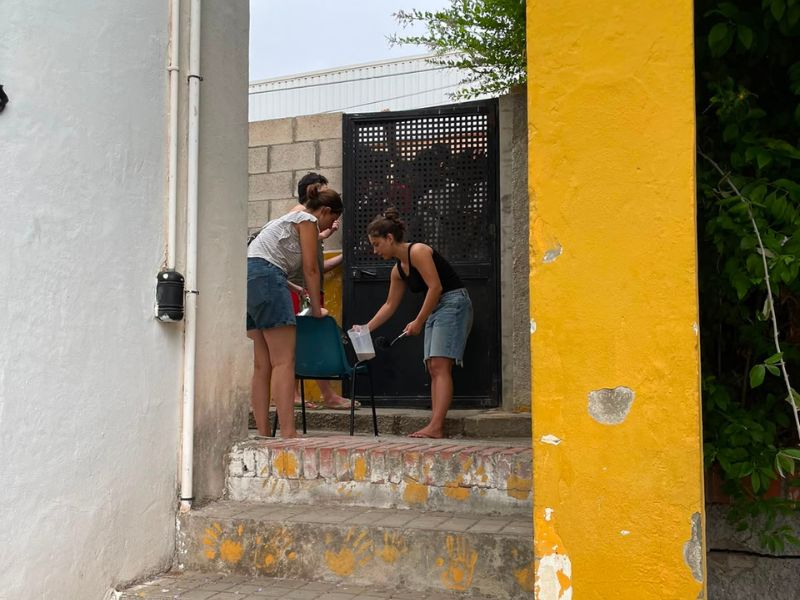
After July 30, the worsening humanitarian crisis in Ceuta led us to adjust our response on the ground:
-
Immediate Emergency Response: Immediate distribution of food and basic necessities to people living on the streets.
-
Emergency Shelter: Launch of a shelter program for highly vulnerable individuals (minors, women with children, LGBTQIA+ individuals, and people with medical needs). Between August and September, over 100 people were admitted; the shelter currently houses 45 permanent residents.
-
Shower and Care Service: A shower service and initial assistance for people living on the streets, attended each morning by about 50 men and in the afternoon by about 30 women, providing meals, hygiene services, nursing care, and basic Spanish lessons with the help of the Hijas de la Caridad.
Despite the emergency response efforts, the sense of “home” has remained unchanged: residents tirelessly help maintain the facilities and manage services for those still living on the streets.
Activities and Community at Maison Effatà (Calais, France)
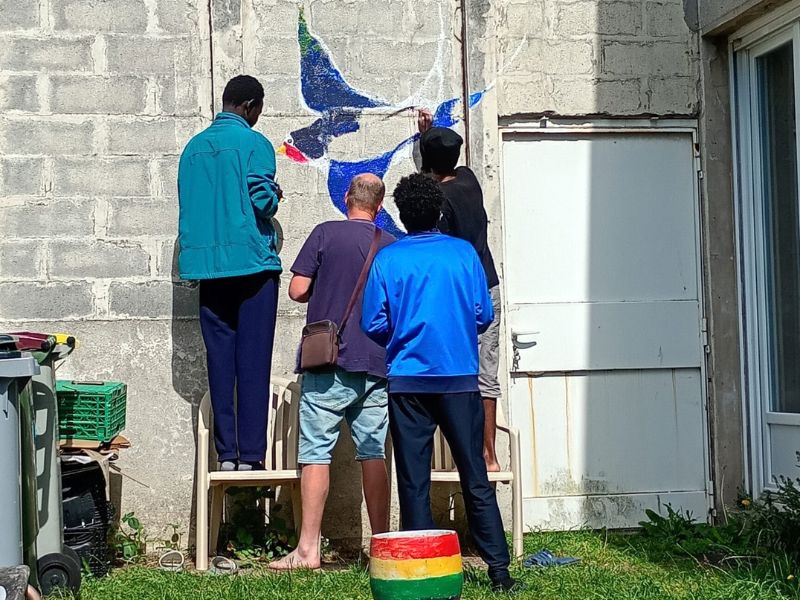
In Calais, favorable summer weather made it possible to highlight the outdoor activities at Maison Effatà: the garden walls were adorned with new murals created by the residents and staff, while outings in the surrounding area offered the residents moments of serenity along the English Channel coast. In July, the facility hosted the CNGEI Scouts (Bergamo chapter and national delegation), while in August, the Attraverso26 camp group actively participated in the life of the facility.
With our eyes set on the future, guardians of our roots
To cap off this busy quarter of activities, the annual meeting of ASCS staff took place in Piacenza from September 8 to 10, held in the picturesque setting of the Scalabrinian Missionaries’ Mother House.
It was a precious opportunity to strengthen community bonds, share life experiences, and rediscover the roots of the Scalabrinian mission. The participants visited the Museum of Emigration and the Cathedral of Piacenza, pausing in silent reflection at the tomb of St. John Baptist Scalabrini.
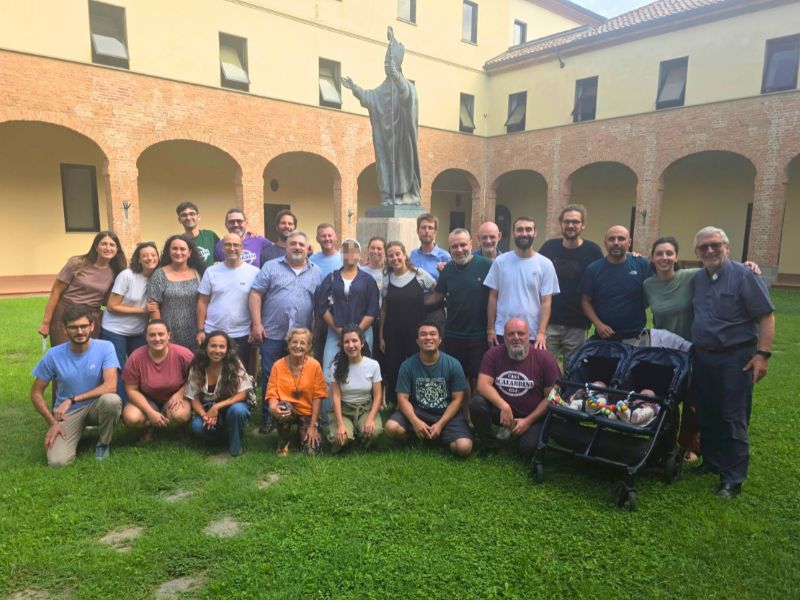
The meeting also provided an opportunity to review the achievements of the past year and outline guidelines for future planning, while renewing our commitment to stand alongside migrants and refugees. A heartfelt thank you goes to the Scalabrinian Missionaries of Piacenza for the warm welcome they extended to the entire team.
Join us: Be part of a welcoming home
Hospitality thrives on everyone’s contribution. You can make a difference today:
-
Become a volunteer: Get involved at our regional offices (Milan, Rome, Chieri) or in our projects at the borders.
-
Support our projects: With a donation, you’ll help us provide food, shelter, legal support, and training courses for hundreds of people.
[Find out how to become a volunteer] | [Support Our Work – Donate Now]