The Housing and Transportation Crisis Facing Farm Laborers in the Metapontino Region
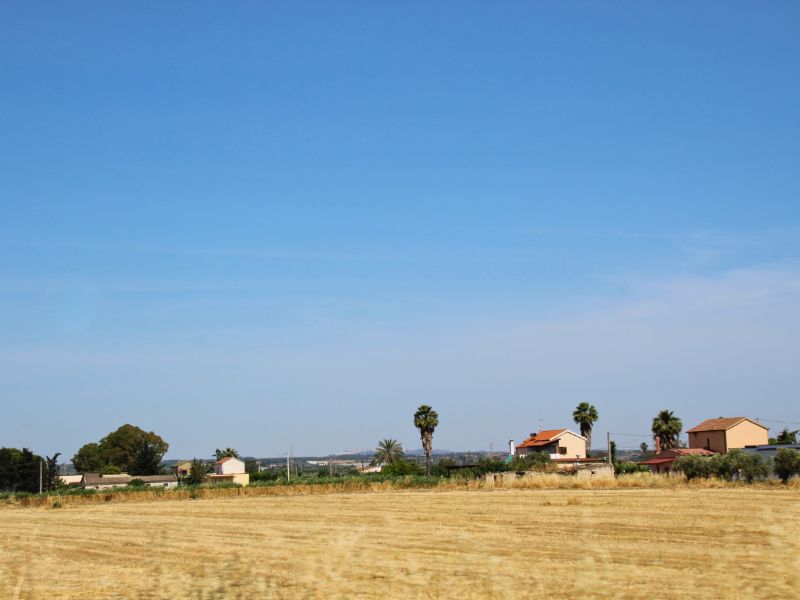
Nestled among expanses of wheat fields, just off the provincial road, stands a large building with a portico, surrounded by a beautiful garden filled with cats. This is Casa Betania, a shelter located in the hamlet of Serramarina, within the municipality of Bernalda (in the province of Matera), and administered by the Migrantes office of the Diocese of Matera-Irsina.
People live here—both current guests and former residents—who are permanently employed in fruit picking: until last week, they were picking strawberries, and now it’s the apricots’ turn. Tomorrow is June 2, but the holiday won’t slow us down: ripe fruit can’t wait, so we’ll still be heading out to the fields. Many of these young people have been working in the area for several years, and although they have a regular employment contract and the financial means to pay rent, they are unable to find housing.
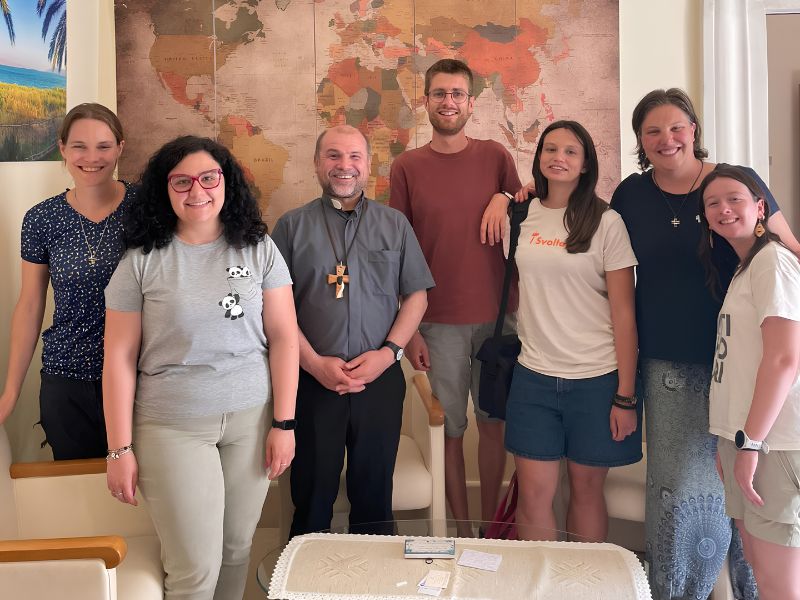
We went to explore the stories, places, and people of the Matera countryside with a small group of young people from ASCS, along with the Auxiliary Sisters, who have a community in Matera and are learning more about seasonal work in this area.
Don Antonio Polidoro, head of the diocesan Migrantes organization, began supporting seasonal workers in 2016, following the eviction from the “Felandina” informal settlement, where about 500 people were living in a ghetto inside a large warehouse. That event prompted him to establish this and other initiatives to address the housing crisis in the area.
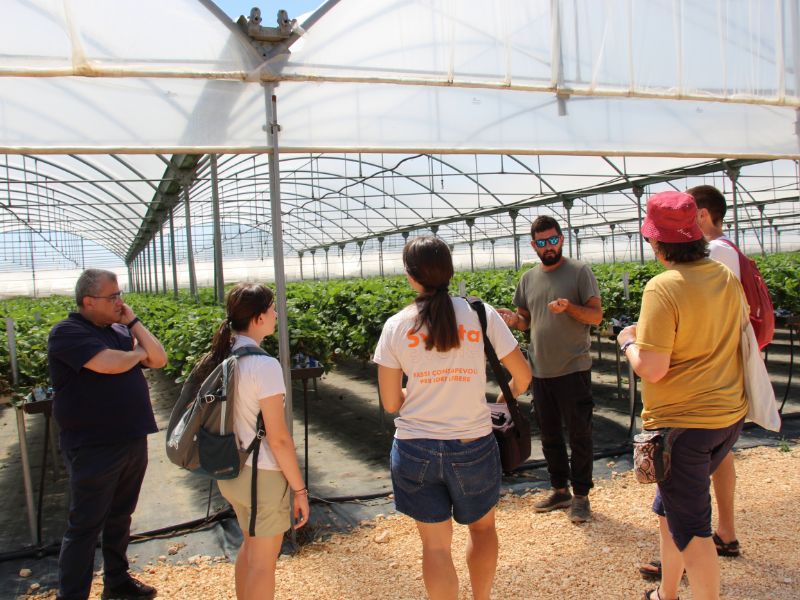
Don Antonio explains the dynamics of this coastal agricultural area, commonly known as “Metapontino” after Metaponto, another hamlet in the municipality of Bernalda. Between the territories of Bernalda and Scanzano Jonico, there are approximately 1,200 hectares dedicated to strawberry cultivation; this production volume, together with that of Campania, represents the heart of this sector in Italy. This crop has become a pillar of employment for the entire area, so much so that Scanzano Jonico established the “Strawberry Festival” a few years ago specifically to highlight the town’s identity linked to this fruit.
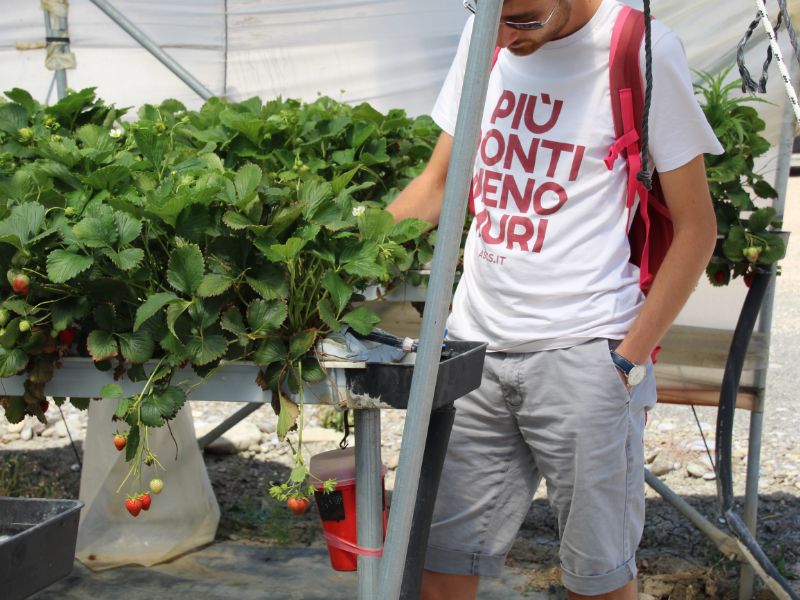
The strawberry harvest season runs from late February to mid-May, requiring a significant increase in labor that attracts workers from all over Southern Italy. However, work in the fields does not end in the spring: the area’s fertile soil allows for the cultivation of numerous other fruit and vegetable varieties, such as apricots and table grapes. For farm laborers, the end of one harvest simply marks the beginning of the next. As a result, agricultural employment moves beyond being purely seasonal to become a stable occupation, offering many people a real opportunity to work in the region year-round.
Despite having stable employment, farmworkers constantly complain about how difficult it is to find apartments to rent, even though they have pay stubs and valid contracts. Pino Passarelli, who works with the association “Tutti Migranti” to protect and support foreign workers, points out the large, unused buildings in Metaponto. In the past, this small hamlet was subject to urban planning based on population growth that never materialized. Today, some of these empty structures—such as an old sports arena—have been occupied by people in need of shelter, while others have been barricaded and walled off to prevent access.
The geography of this area was reshaped in the 1950s by land reform. In the period following the 1950 reform, numerous families arrived from more than 50 different municipalities in southern Italy to settle on the land assigned to them, repopulating areas that had been reclaimed in previous decades. This process gave rise to small towns characterized by significant cultural fragmentation, where residents still maintain a deep connection to their diverse ancestral roots. The town center of Metaponto remains a visible symbol of that era: its main square is surrounded by imposing buildings designed to accommodate a population boom that never materialized.
“There are houses, but they won’t rent them to Black people.” This is the firsthand experience of Abdu, one of the residents of the Serramarina facility. In fact, many landlords choose to rent exclusively to tourists for short summer stays or, alternatively, prefer to leave their properties vacant rather than rent them to foreign workers. This discrimination often forces farmworkers to live in the canals, in makeshift shelters, or in housing without formal leases.Legal housing status, on the other hand, is a crucial piece of the puzzle: without a lease, it is not possible to register with the civil registry and obtain residency status, which is the essential document for renewing a residence permit. Because of this catch-22, many people are unable to renew their documents, slipping into legal limbo. To address this issue, municipalities could issue what is known as “fictitious residence” (a formal address designated for the homeless to ensure their access to essential rights, such as primary care), but municipal offices frequently put up strong resistance to granting it.

In addition to housing, there is a serious problem with logistics and transportation: the lack of adequate public transportation hinders the integration of families, leaving them isolated and making it difficult to reach their workplaces and access services. It is into this institutional vacuum that the “caporalato” system steps in, responding to the lack of services by offering illegal solutions. At the same time, the farms themselves face significant difficulties in finding workers, compounded by the ineffectiveness of public employment centers. This stalemate fuels the abusive practices of the caporali, who thereby gain leverage to blackmail the people for whom they secure employment.
There is no shortage of organizations in the area that are trying to plug these gaps. Caritas and Migrantes in Matera provide shelter to individuals and families in several housing units that they manage directly. However, these are temporary housing solutions, unsuitable for meeting the needs of those who are fully able to work and would like to settle permanently and build a future in the area.
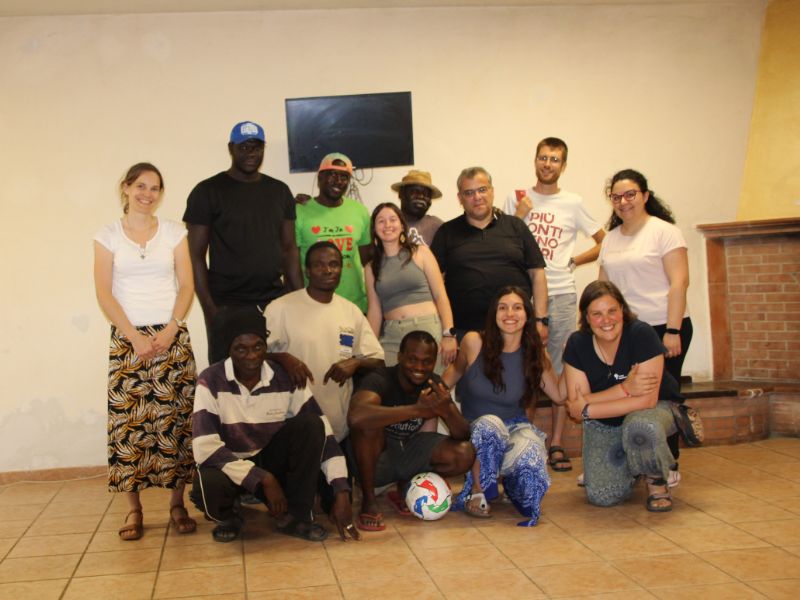
Meanwhile, Franco Lo Monaco is working on long-term solutions in collaboration with the No Cap association. In the nearby hilltown of Montescaglioso, Lo Monaco maps out the unoccupied homes, talks with the owners, and encourages them to rent them out to foreign farmworkers. For a time, he even had to personally take charge of transporting the workers to the fields, given the complete lack of public transportation between Montescaglioso and the farms on the plain.
Institutions have also implemented measures, as explained by Paola Andrisani, a staff member of the Nova Consortium. The FAMI Su.Pr.Eme 2 project (“The South Takes the Lead in Overcoming Emergencies Related to Severe Exploitation and Severe Marginalization of Foreigners Legally Residing in the Five Least-Developed Regions 2”) includes, among its initiatives, the establishment of temporary housing for workers. However, even this measure proves to be temporary and unsuitable for those who desire stability in their lives and need to solidify their legal status.
In this scenario , the almost total absence of the business community from the public debate is striking . One can’t help but wonder who the truly invisible players in this story are. It is not the gangmasters, nor even the farmhands, whose names unfortunately only come to light in the wake of tragic events. The invisible ones are the employers and landowners: those who profit from this system of exploitation and who are never held accountable.
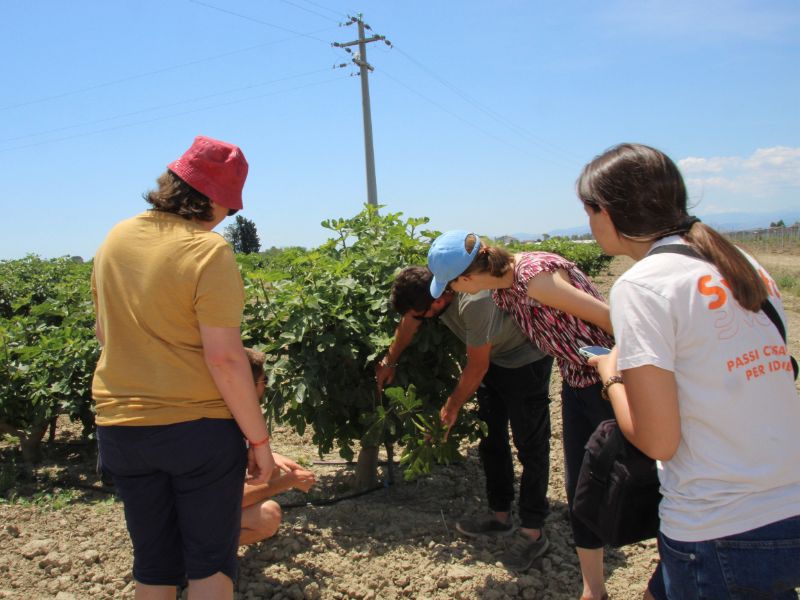
Given the clear need for labor on the part of businesses, policymakers should work with them to develop joint solutions. It should be noted that some companies are already taking independent action on the logistics front, arranging private buses to transport workers daily from neighboring regions during peak harvest periods. Nevertheless, at the systemic level, businesses remain excluded: the Su.Pr.Eme program itself focuses almost exclusively on farmworkers, without any real involvement of employers.
Paola Andrisani cites the example of Spain—despite its challenges—where farms are required to provide housing for their employees. Another exemplary model can be found in Saluzzo, Piedmont, where the municipal government has established a network of community hostels for workers, funded through financial contributions from employers.
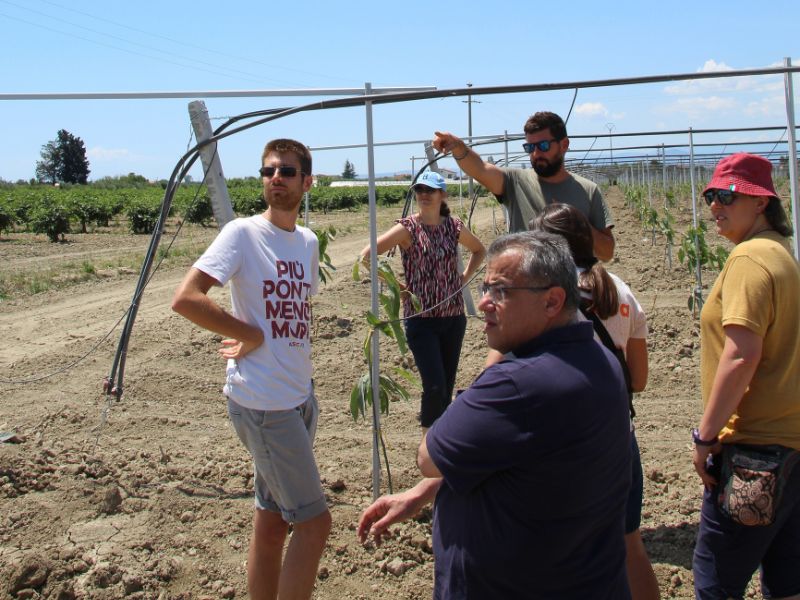
To achieve structural reforms It is essential to launch a collaborative dialogue that involves the active participation of all stakeholders: government institutions, the business community, and individual workers. Combating illegal labor recruitment is an extremely complex issue. Although contractual protections and a living wage are essential pillars, we cannot avoid addressing crucial issues such as the housing crisis, the transportation network, and bureaucratic roadblocks. Without action on these fronts, even workers with the strongest contractual protections risk losing their documents, falling prey to exploiters, and being sucked back into the cycle of irregular migration.
In Matera, for the final stop on our journey, we’re having lunch with Bishop Benoni Ambarus, who was recently elected president of Caritas Internationalis but whom everyone calls “Don Ben.” What role should the local Church play in a context as complex as that of agricultural work in the Metapontino region? There are no easy solutions, but rather small steps to take, paths to carefully chart, and processes to set in motion on multiple levels—all of which require consistency, guidance, awareness-raising, and qualified personnel.